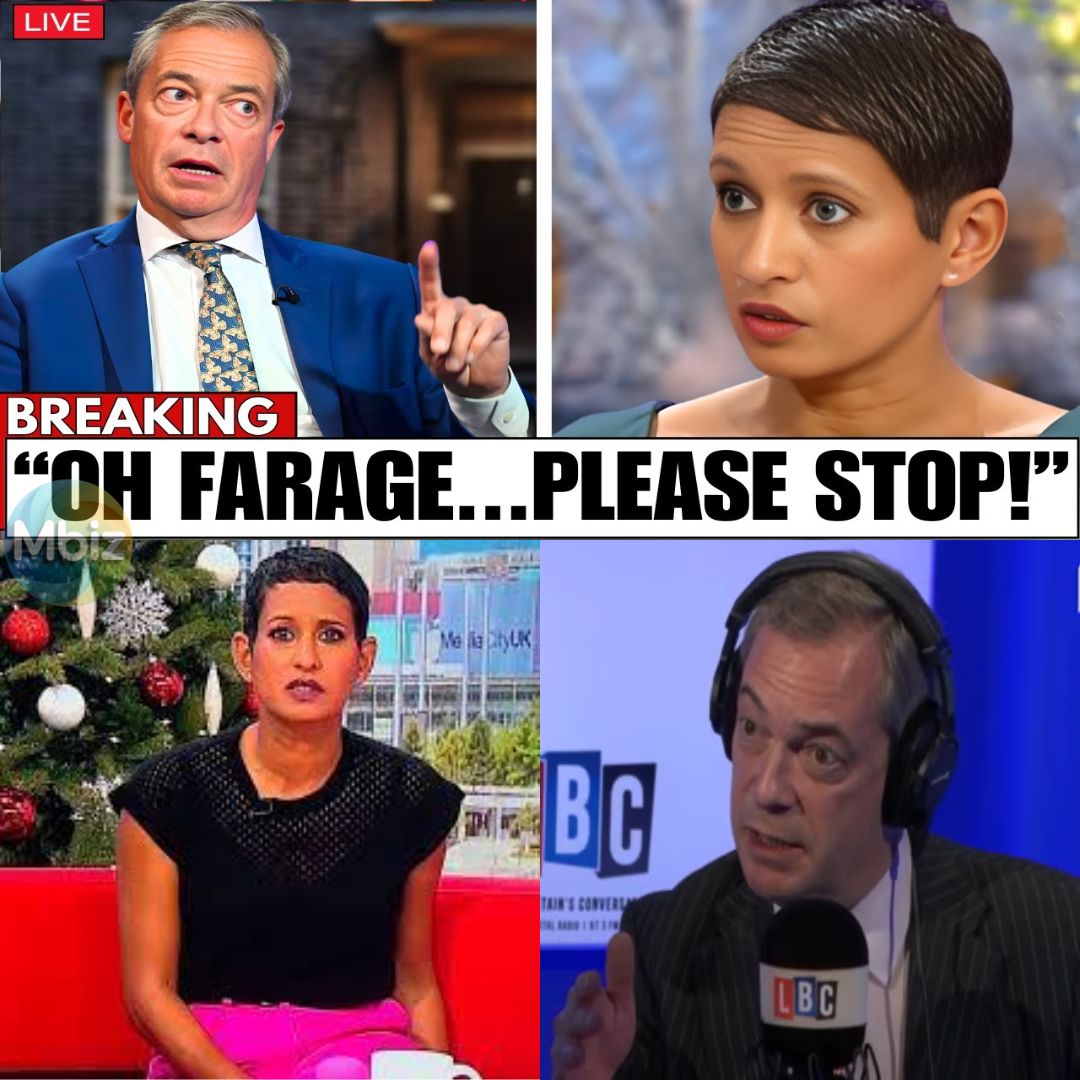
In a stunning live broadcast that has left Britain reeling, Nigel Farage, the outspoken political figure, brought BBC host Naga Munchetti to tears during an intense interview, exposing what many viewers are calling blatant media bias and sparking nationwide debate.
 The confrontation unfolded on-air as Farage meticulously laid out his bold economic proposals aimed at overhauling the Bank of England’s functions and tackling the entrenched issues within Britain’s financial system—a plan he insists is grounded in expert advice and radical ambition.
Despite presenting detailed solutions for a struggling economy and highlighting the plight of young people trapped in a punitive tax environment, Farage was met with relentless skepticism and hostile questioning from Munchetti, whose tone and persistent focus on funding sources appeared designed to undermine the political leader rather than engage sincerely.
This exchange revealed a deeper fissure between Farage and the mainstream media, which he openly condemned as “deceivers,” accusing them of ignoring urgent public concerns and instead propagating false narratives to protect elite interests—a charge that resonated powerfully amid swirling mistrust of traditional outlets.
Viewers witnessed Farage maintain remarkable composure as he navigated accusations and dismissiveness, repeatedly emphasizing the real struggles faced by everyday Britons and the necessity of his reforms to dismantle what he called a “racket” benefiting big banks at the expense of ordinary people.

Naga Munchetti’s emotional response—a visibly shaken moment toward the interview’s climax—served only to amplify the sense that this was no ordinary political exchange but a watershed moment highlighting the toxic dynamics between dissenting voices and established media institutions.
The segment quickly ignited conversations across social platforms, with many viewers questioning the impartiality of the BBC and calling out the apparent agenda to discredit Farage rather than honestly consider his policy proposals or political vision for the country.
Confronted with repeated efforts to paint him as disconnected or radical, Farage incisively challenged the status quo, pointing to failures in previous leadership and the complacency of mainstream parties that he argues have long neglected the working class and small business owners struggling under overwhelming taxation.

His critique extended to current figures like Rishi Sunak, whom he described as emblematic of a detached political elite—deeply out of touch with the realities of British workers—further intensifying the debate around leadership and accountability in Westminster.
The broadcast didn’t just expose media bias; it also spotlighted a broader crisis of trust plaguing British journalism, with other outlets and independents corroborating claims of manipulation, censorship, and selective reporting that distort public discourse and erode democratic engagement.
Farage’s steely determination to fight back against what he brands a “corrupt media” confronting him with orchestrated hostility underscored a political battlefield fraught with frustration, mistrust, and the urgent demand for transparency and honest dialogue about Britain’s future.

As the interview concluded, the emotional tension lingered—both in the studio and across the nation—prompting urgent calls for media reform and a reexamination of how political voices are treated in public forums charged with shaping the country’s destiny.
This dramatic live moment is more than a clash of personalities; it symbolizes a pivotal crisis in British public life where the battle for truth, fairness, and representation is being fiercely contested—and the outcome remains uncertain.
Nigel Farage’s confrontation with the BBC may ultimately redefine the relationship between politicians and the media, igniting deeper conversations on freedom of speech, accountability, and the critical role journalism should play in serving the public rather than entrenched power.
Britain watches now as the implications of this explosive interview ripple through political and media circles, signaling a potential turning point in how truth and transparency are demanded and delivered in a nation hungry for real change.


