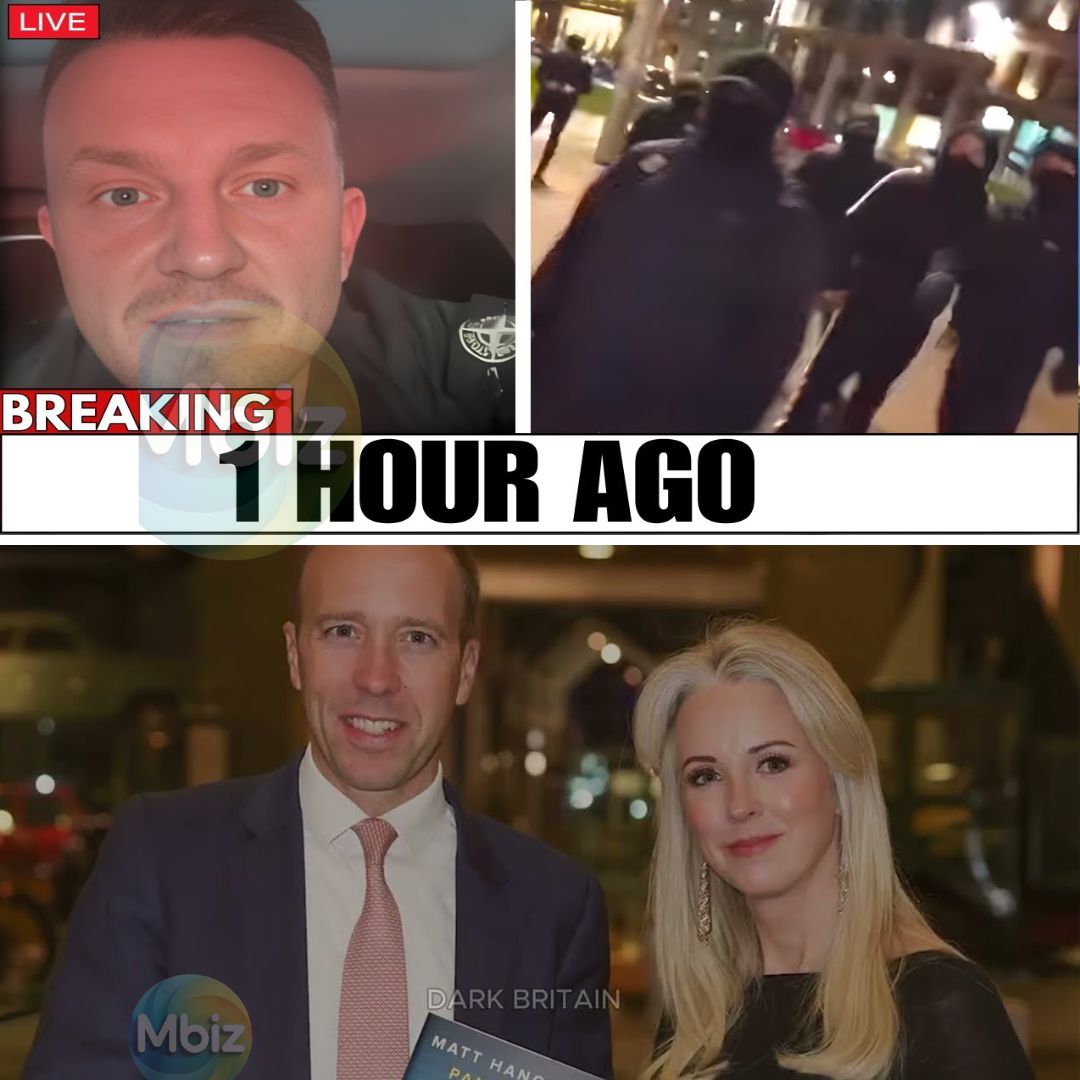
Chaos erupted on the streets of Britain as controversial figure Tommy Robinson found himself ambushed by a group of ten masked activists, all clad in balaclavas, clearly aiming to intimidate him. What started as a tense confrontation quickly devolved into a spectacle of mockery and laughter, as Robinson turned the atmosphere upside down. Instead of cowering, he laughed in the face of danger, transforming the intended show of force into a comedic display that left both the masked activists and onlookers stunned. This incident highlights the increasingly polarized political landscape in Britain, where intimidation tactics can backfire spectacularly.
 The viral video capturing this bizarre encounter shows Robinson’s defiance as he jeers at the masked group, challenging them with taunts like “Hit me, God!” His mocking demeanor stripped the activists of their intended power, making them appear awkward and ineffective. As the video spread across social media, it became a symbol of how confidence can dismantle fear, flipping the narrative on its head.
This incident is more than just a moment of chaos; it serves as a reflection of the current state of British politics, where divisions run deep. The masked activists, intended to project strength, ended up as the punchline, while Robinson emerged looking calm and in control. The stark contrast between the two sides reveals the fragility of intimidation in the face of unwavering confidence.
 Meanwhile, the ongoing COVID inquiry has come under fire for its extravagant spending, costing taxpayers £175,000 a day without addressing critical questions about the effectiveness of lockdowns. Critics argue that the inquiry is politically motivated, focusing on blaming the government rather than exploring the real impact of restrictions on public health and society.
The inquiry’s recent report claims that mismanagement during the pandemic led to the loss of 23,000 lives, a figure many question due to its seemingly arbitrary nature. Skeptics point out that the inquiry appears biased, favoring a narrative that supports lockdowns while ignoring the broader consequences of such measures.

As the inquiry continues to unfold, it raises pressing questions about accountability and the true cost of government decisions during a crisis. Were lockdowns effective, or did they merely delay the inevitable spread of the virus? Did the government’s response prioritize public health, or did it create more harm than good?
 The juxtaposition of Robinson’s confrontation and the ongoing inquiry highlights the chaotic landscape of modern Britain, where political narratives often overshadow the truth. While Robinson faced down intimidation on the streets, the inquiry reflects a different kind of confrontation—one between public perception and political reality.
As the public grapples with these issues, it becomes clear that the spectacle of bureaucracy does not always equate to accountability. The consequences of decisions made during the pandemic continue to affect everyday lives, leaving citizens questioning the motives behind official narratives.
In a world where perception matters more than ever, this incident serves as a reminder that confidence can dismantle fear, and that the truth often lies beneath layers of political theater. The chaos on the streets and the turmoil within the inquiry both signify a critical moment in Britain’s ongoing struggle with its identity and governance.


