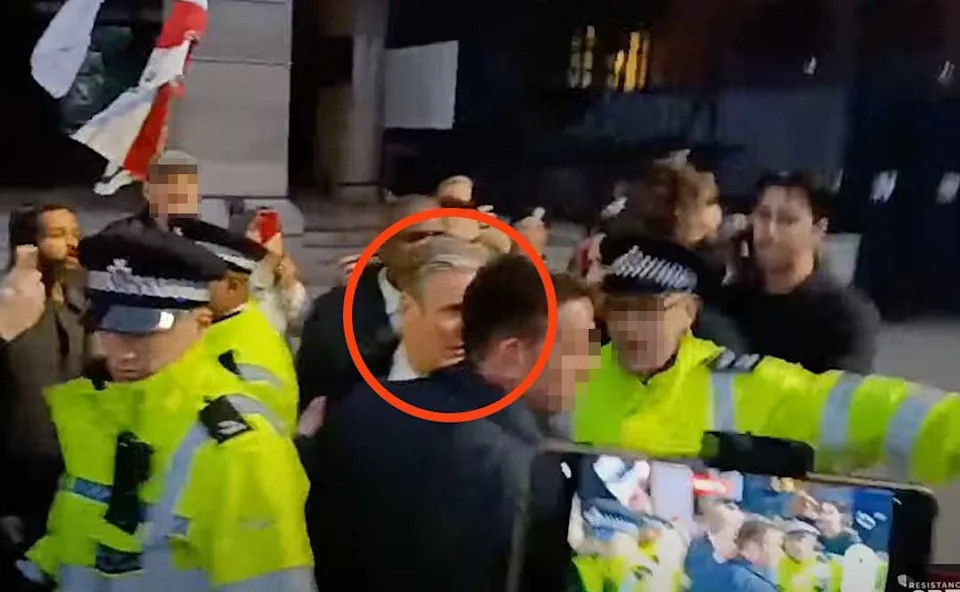
In a stunning and unprecedented public confrontation, Labour leader Keir Starmer was viciously heckled as “TRAITOR” and booed fiercely by his own supporters during a speech at Parliament, marking a deeply alarming fracture within his party. What was meant to be a routine address quickly erupted into chaos, exposing massive divisions and a mounting crisis of confidence in Starmer’s leadership, urgently signaling political turmoil ahead.
 From the moment Starmer stepped onto the stage, the atmosphere was icy and unwelcoming. Instead of applause or polite curiosity, a heavy silence hung over the crowd, thick with simmering resentment. The energy was palpably different — charged with anger and betrayal.
As Starmer began speaking of economic plans and Brexit, attempting to maintain a middle ground, the crowd’s discontent only grew. His words fell flat, eliciting frustrated murmurs and disapproving looks. The attempt to appeal to all factions backfired spectacularly.
Tensions snapped when Starmer addressed the Israel-Gaza conflict, opposing calls for a ceasefire. This position ignited an explosive reaction, with loud boos and relentless chants of “TRAITOR” echoing through the hall. The backlash was immediate and unmistakable—this was no mere disagreement, it was public repudiation.
Labour supporters loudly accused Starmer of failing the party and betraying core values. Voices cracked through the tumult, challenging his leadership and demanding accountability on issues like healthcare and child services, underscoring the deep dissatisfaction within the party’s base.
The spectacle was more than a protest; it was an outright rejection of Starmer’s vision. His attempts to push forward were met with shouted interruptions and visible signs of disapproval, including walkouts and cold stares from Labour MPs present, visibly shaken by the revolt.
Behind the scenes, murmurs of doubt about Starmer’s capacity to lead have surged among senior party figures. The backlash at this event reflects deeper unease over his leadership style—seen as evasive and out of touch with Labour’s traditional working-class roots.
 Starmer’s pivot on key issues like Brexit, once a staunch Remain supporter who pushed for a referendum reversal, now appearing muted and ambiguous, has alienated both pro-Leave and pro-Remain factions. His perceived indecisiveness serves only to deepen internal rifts.
Further compounding Labour’s woes is Starmer’s recent sudden shift on his stance towards Donald Trump, now speaking favorably about Trump’s foreign policy. Many within the Labour ranks see this as a betrayal of long-held party positions, intensifying voices of dissent.
The disruption in Southport, where this incident unfolded, isn’t isolated. It’s the culmination of mounting frustrations manifesting as a public crisis. Starmer’s leadership, once considered steady, is now viewed as dragging the party into uncertainty and confusion.
Critics emphasize that this isn’t a matter of policy disagreement alone but a fundamental identity crisis for Labour. The core supporters feel abandoned as the party drifts toward centrist policies, eroding its historic social justice and working-class advocacy foundation.
 The chants and walkouts during Starmer’s speech were a stark manifestation of growing frustration among Labour’s grassroots. Social media is flooded with criticism and doubt, signaling a dangerous erosion of trust that could have long-term consequences for the party.
Labour MPs’ visible discomfort during the event highlights internal disarray. The political cost of this public rejection is severe, as party members question the leader’s mandate and his ability to unite a fractured base ahead of crucial future elections.
Starmer’s dilemma is acute: how to reconcile his pragmatic approach with the need to inspire and energize a loyal Labour following disheartened by his recent policy shifts and perceived lack of conviction.
This incident lays bare the volatile state of Labour politics, raising urgent questions about the future direction of the party. Will Starmer be able to reclaim lost trust, or is this public breakdown the harbinger of a leadership crisis?
The Southport event serves as a critical flashpoint. Protesters’ chants branding Starmer a “traitor” resonate far beyond this one gathering, capturing the profound sense of betrayal felt among many Labour voters and activists.
As the backlash grows louder, political analysts warn that Labour’s internal tensions threaten to derail the party’s cohesion and electoral prospects if swift, decisive action is not taken to address core grievances.
Starmer now faces unprecedented pressure to clarify his positions and rebuild credibility. Failure to do so risks deepening the divide and inviting further challenges from within his ranks, destabilizing Labour just when unity is most necessary.
 This confrontation underscores the fragility of party loyalty in turbulent times. The public defiance witnessed at Parliament is a dramatic wake-up call for Labour’s leadership to realign with the priorities and values of its base.
The fallout from this explosive episode continues to unravel, sparking urgent debates about Labour’s identity, leadership, and strategic direction going forward in an increasingly polarized political landscape.
With the political temperature rising, Labour’s future hinges on Starmer’s ability to regain control of the narrative and mend the widening chasm between himself and core supporters who once championed his rise.
What happened in Southport is more than a failed speech; it’s a stark symptom of a party in crisis, grappling with internal dissent and an uncertain path ahead amidst national and global challenges.
 The significance of this breaking news cannot be overstated. It reveals how swiftly public political capital can erode when trust breaks and voices once loyal turn to open rebellion.
As the situation develops, all eyes remain on Keir Starmer. The question remains: can he navigate this political storm and restore faith, or is this episode the beginning of the end for his leadership?