In a dramatic showdown in Parliament just moments ago, Nigel Farage unleashed a blistering attack on the status quo, demanding a restoration of parliamentary sovereignty and challenging the influence of unelected bureaucrats over British law. His fiery address, delivered during a 10-minute rule motion, reignited the contentious debate surrounding Brexit and the power dynamics within the UK’s political landscape.
 Farage’s speech served as a stark reminder of the unresolved issues stemming from the 2016 Brexit referendum, where the British public made a decisive choice to reclaim control over their laws and borders. “This is unfinished business,” he proclaimed, urging MPs to reject the constraints imposed by outdated conventions and international agreements that he argued undermined their authority. His call to arms resonated with a palpable sense of urgency, as he insisted that the will of the people must prevail over legal frameworks that could override elected representatives.
The atmosphere in the chamber quickly escalated into chaos, with shouting, heckling, and palpable tension as Farage’s words struck a nerve among MPs. He posed a provocative question: “Do you not believe this country is good enough to make its own laws?” This rhetorical challenge not only highlighted the ideological divide within Parliament but also tapped into a broader national sentiment of frustration and disillusionment among voters who feel sidelined by technocratic governance.
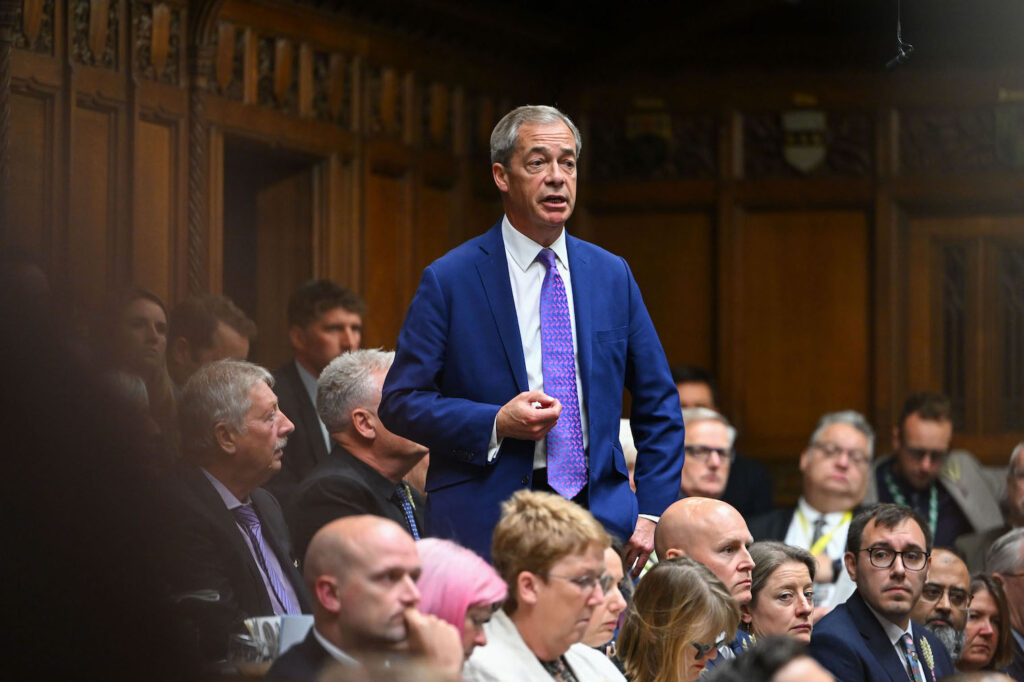 As Farage continued, he painted a stark picture of a Parliament stripped of its power, warning that decisions affecting the nation could be dictated by distant bureaucrats rather than elected officials. His passionate plea for sovereignty ignited fierce reactions across party lines, with some MPs rallying to his cause while others denounced his approach as reckless populism. The debate quickly spilled beyond the walls of Westminster, with clips of the explosive exchange flooding social media and sparking heated discussions across the country.
Critics of Farage’s motion raised alarms about the potential repercussions on Britain’s international standing and human rights obligations, warning that a retreat into nationalism could isolate the UK from its allies. Meanwhile, supporters hailed the motion as a necessary reclamation of power, asserting that Parliament must be the ultimate authority in determining the nation’s laws.
 In the wake of this explosive parliamentary moment, the implications reverberate far beyond the chamber. Britain finds itself at a crossroads, grappling with fundamental questions about identity, sovereignty, and the balance of power between elected representatives and international norms. As the nation watches and debates, one thing is clear: the struggle for the soul of British democracy is far from over. Who truly governs this country—the people, their Parliament, or the conventions that claim to protect them? The answer remains to be seen, but tonight, the conversation has been reignited, and the stakes have never been higher.