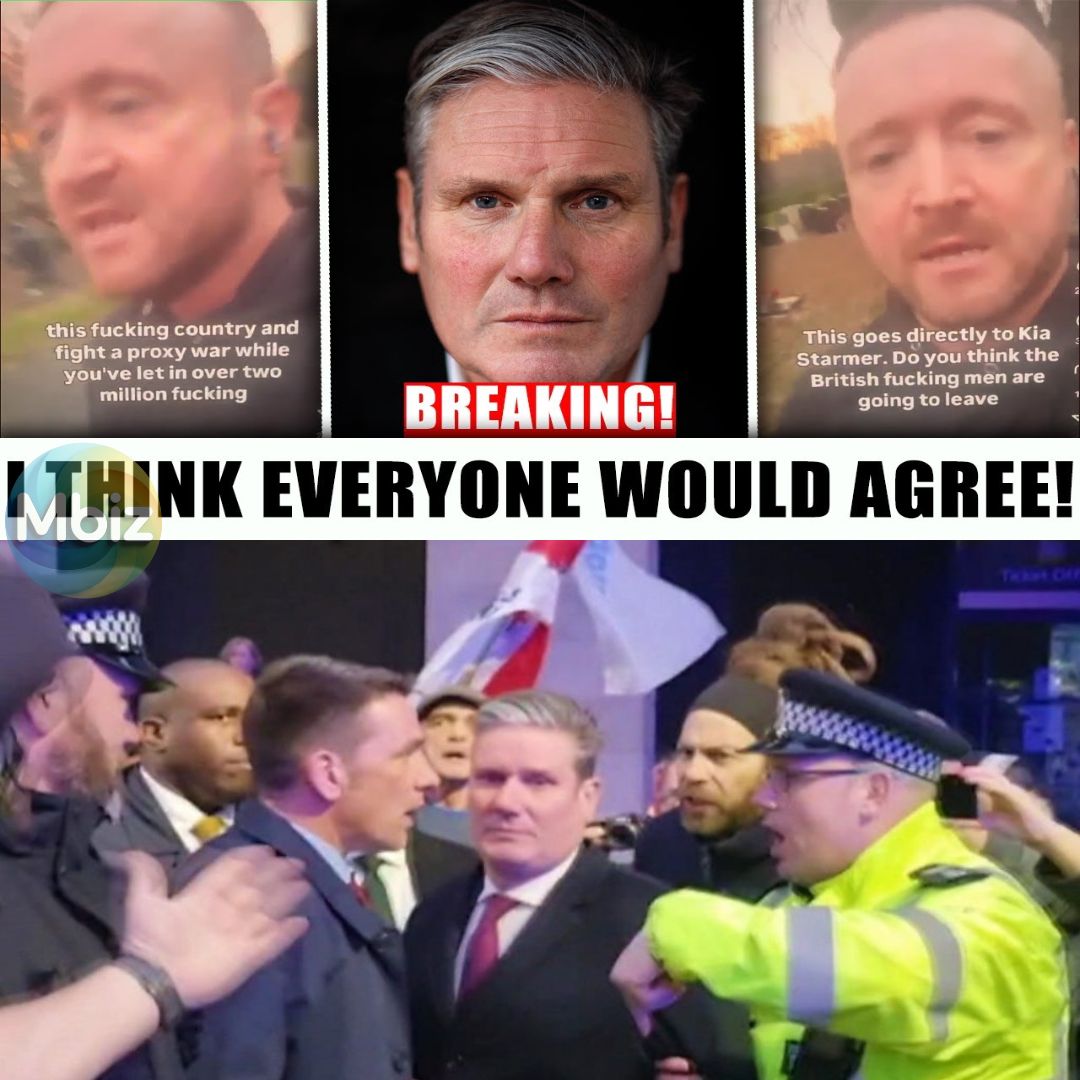
A British man has delivered a searing message directly to Labour leader Keir Starmer, igniting a firestorm of controversy and signaling deep-seated unrest within the UK. His fierce denunciation challenges Starmer’s leadership amid growing tensions over public health policies, war involvement, and political legitimacy.
 In a raw statement laced with frustration and urgency, the man condemned Starmer for pushing Britain into proxy wars while allegedly allowing over two million migrants into the country. His words painted Starmer not as a national leader, but as a detached technocrat, disconnected from the struggles of ordinary citizens.
The man’s outburst charged that vaccines are tools of depopulation, accusing the government of greed and deception. “We’re awake,” he declared defiantly, signaling a widespread belief that public trust in government narratives is collapsing. His language was harsh and confrontational, yet underscored by a sense of passionate patriotism.
He promised a massive, peaceful protest in London after Christmas, one that he vowed would roar with the voice of a nation refusing to surrender its future. The demonstration, he said, would be nonviolent but relentless—a roar of defiance meant to shake the foundations of current leadership.
This message resonates far beyond mere political critique; it strips Starmer of moral authority and casts doubt on his legitimacy. The speaker portrays Starmer as an agent of “globalists,” prioritizing external interests over British citizens and eroding the social contract that underpins political leadership.
 The attack underscores a profound crisis of trust. Starmer’s reassurances are dismissed as lies, and his appeals to responsibility as manipulation. The public, the man insists, is no longer deceived. This fracture threatens to destabilize traditional political discourse, framing Starmer not as a leader to debate, but an obstacle to overcome.
The symbolic weight of the message is immense. Starmer is not seen as a leader capable of inspiring sacrifice or connection, but rather as an opaque manager of a system demanding sacrifices from the public while remaining insulated from consequences. This perception alone could prove devastating in moments of national crisis.
Amid this explosive confrontation, the transcript reveals broader public debates raging about health measures and the role of personal responsibility. Disputes over masks, vaccines, and NHS pressures reflect ongoing tensions in British society, fueling anger toward perceived government overreach and mishandling.
Calls for simple public health precautions clash with skepticism toward official narratives. Some argue masks and vaccines serve the common good, while others view them as intrusive or ineffective, underscoring division within households and communities.
 The interview segment included pointed exchanges about NHS strikes and funding, revealing widespread frustration with public service conditions and pay. Debates over NHS capabilities and worker demands highlight the stress tearing at the fabric of British society.
Government attempts to contain these tensions face rising challenges as citizens articulate a growing need for authenticity and accountability from their leaders. This moment marks a boiling point in British politics, with public anger moving from quiet discontent to vocal defiance.
Keir Starmer’s political future now hinges on his ability to bridge this widening gap between elite governance and popular will. The blistering message delivered by the British man sends a clear warning: political legitimacy must be earned through genuine connection and transparent leadership—or face widespread rejection.
 With the promised London protest on the horizon, all eyes now turn to the responses from Starmer and the Labour Party. The coming weeks will test the resilience of Britain’s political institutions as never before.
This extraordinary outcry is symptomatic of a larger global trend challenging established power, demanding leaders who not only manage systems but embody the hopes and fears of their people.
As this dramatic episode unfolds, the UK stands at a crossroads. The deep frustrations voiced here could herald transformative change or further polarization, defining the nation’s path in the volatile months ahead.
The British public’s roar, as declared, may soon echo through London’s streets—an urgent call for a new era of political engagement and accountability, with consequences reverberating far beyond this moment.


