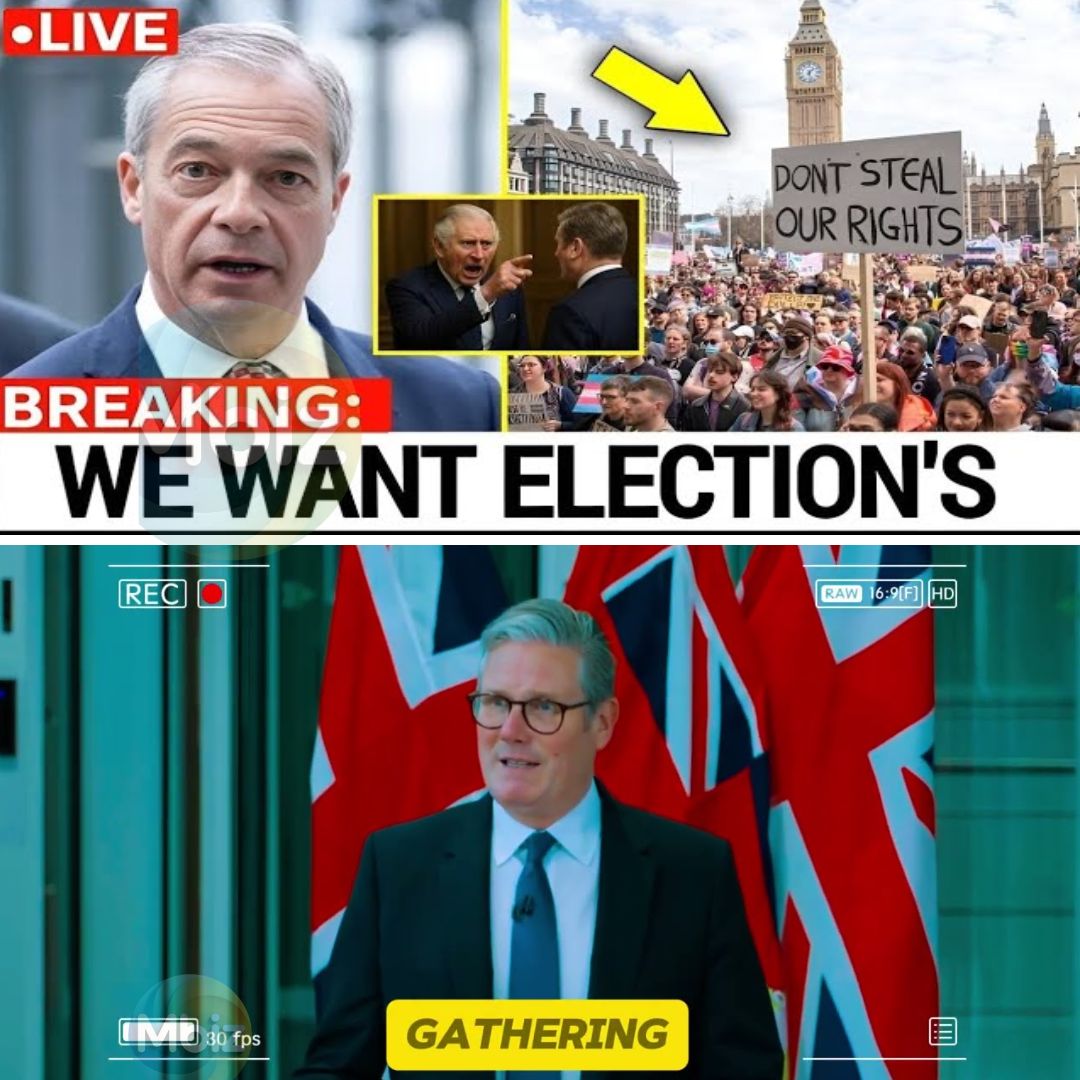
BREAKING: In an unprecedented display of democratic fervor, thousands of British voters have surged onto the streets of London, marching toward Buckingham Palace to demand an immediate general election. This spontaneous uprising follows explosive polling data revealing that Reform UK, once dismissed as a fringe party, is projected to secure a staggering 74-seat majority in Parliament. The traditional political landscape is in chaos as the establishment scrambles to respond to this seismic shift, with Reform UK poised to potentially form the next government.
 The atmosphere is electric as citizens brandish flags and banners, their message clear: the current government has lost its legitimacy, and they demand a voice in their future. This is not merely a protest; it is a reckoning, a moment of truth for a nation that feels abandoned by its leaders.
The urgency of the situation is underscored by the timing of this march, coinciding with the release of a groundbreaking political poll that has sent shockwaves through Westminster. Reform UK’s rise is not just a theoretical exercise; it is a reality that has left even seasoned political analysts reeling.
Voters across Britain have expressed their frustration over unfulfilled promises and a sense of betrayal from both major parties. For years, they have been told that Brexit would bring control, only to witness continued challenges in immigration and economic stability. The cost of living crisis has exacerbated these feelings of disillusionment, prompting many to seek alternatives.
 Reform UK has tapped into this widespread discontent, resonating with those who feel unheard and unrepresented. As traditional parties focus on internal squabbles, Reform UK has been actively engaging with communities, addressing real issues that matter to everyday citizens.
The march to Buckingham Palace represents a collective demand for change, fueled by a growing belief that the political establishment has failed. Voters from all walks of life—teachers, nurses, small business owners—are united in their call for an election now, rejecting any further delay.
Behind closed doors, Westminster is in turmoil. Emergency meetings are underway as Labour and Conservative leaders scramble to devise strategies to counter Reform UK’s momentum. Some are advocating for policy shifts, while others cling to denial, insisting the polling must be wrong.

But this is no ordinary political moment. The tide is shifting, and the demands echoing through the streets of London reflect a profound discontent with the status quo. The current government knows that an election now could spell disaster, as Reform UK’s support continues to swell.
As the crowds gather, the pressure mounts. The world is watching as this historic moment unfolds, raising questions about the future of British democracy. What happens if the government continues to ignore the call for an election?
 The stakes have never been higher. The transformation of Reform UK from a minor player to a potential majority party is a remarkable political shift that could redefine the landscape of British governance.
With every passing moment, the urgency intensifies. The voters marching to Buckingham Palace are not just asking for an election; they are demanding recognition, representation, and a government that listens. The establishment’s response will determine the future of the nation.
As this extraordinary situation develops, one thing is clear: the political landscape in Britain is on the brink of a monumental change, and the voices of the people cannot be silenced any longer. The march to Buckingham Palace is a clarion call for democracy, echoing the sentiments of a nation ready for real change.